
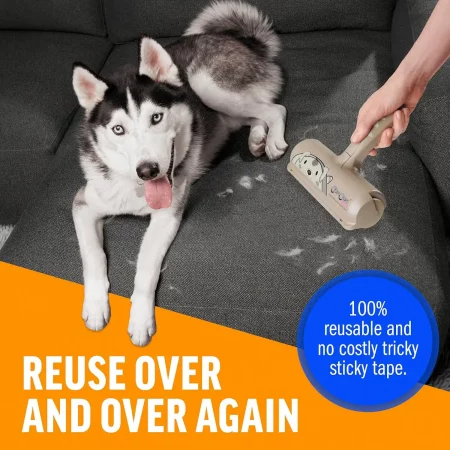
There is a saying amongst dog owners: “No outfit is complete without dog hair.”
If you own a Poodle or a Bichon Frise, you can stop reading now. You are living on easy mode. This article is for the rest of us. The ones who find fur in the butter dish. The ones who can tell which way the wind is blowing by the tumbleweeds of undercoat drifting across the kitchen floor.
You love your dog. But you hate what they do to your home.
Here is the definitive list of the worst offenders, and why different breeds require different cleaning tactics.
The League of Heavy Shedders
We have ranked them not just by volume, but by the “stickiness” of the hair.
- The “German Shedder” (German Shepherd): They blow their coat twice a year, but somehow shed 365 days a year. It’s thick, dual-layer fur that clumps everywhere.
- The Golden Retriever: The glitter of the dog world. It’s long, fine, and floats in the air, landing on surfaces the dog has never even touched.
- The Husky & Malamute: When they moult, it looks like a sheep explosion. You don’t clean this up; you excavate it.
- The Labrador: Don’t let the short coat fool you. They have a dense, water-resistant undercoat that sticks to upholstery like glue.
- The Pug & French Bulldog: The silent assassins. See below.
- The Corgi: Small dog, big mess.
- The Saint Bernard: Hair mixed with drool. Concrete.
- The Jack Russell: Wire-haired varieties are manageable. Smooth coats? Nightmare.
- The Dalmatian: White hairs on black trousers. Black hairs on white sofas. You cannot win.
- The Border Collie: Fine hair that weaves into carpets.
The Physics of Fur: Fluff vs. Needles
Not all hair is created equal. To clean it, you must understand the enemy.
Type A: The Tumbleweed (Husky, Retriever, Shepherd)
This is soft, downy undercoat. It clumps together.
- The Problem: It clogs vacuum cleaners instantly. It fills the bag in ten seconds flat.
- The Fix: The ChomChom works here by grabbing the clumps. Because it doesn’t rely on suction pipes that block, it can handle high volume without jamming.
Type B: The Needle (Pug, Beagle, Dalmatian)
This is the one that makes grown men cry.
- The Problem: These hairs are short, stiff, and barbed. They don’t sit on the fabric; they stab into it. A vacuum cleaner simply pulls at the exposed end, but the weave holds the hair tight.
- The Fix: You need mechanical agitation. The back-and-forth scrub of the ChomChom wiggles the “needle” loose from the weave before flipping it into the trap. It’s the only way to get a Pug hair out of a car seat.
The Two-Pronged Attack
If you own one of the breeds above, cleaning the sofa is reactive. You need to be proactive.
1. Tackle the Source: Ask any groomer. You need to deshed the dog. Use a Furminator or an undercoat rake once a week. Do it outside. The more you catch in the brush, the less lands on the rug.
2. Tackle the Destination: Keep the ChomChom on the coffee table. Use it daily. If you let the hair build up for a month, it gets trampled into the fabric and becomes part of the furniture’s DNA. A thirty-second roll every evening keeps the needle-hairs from settling in.
The Verdict
If you own a Husky, you have accepted chaos into your life. We can’t stop the shedding. Biology is biology.
But we can make your sofa sittable again for guests who aren’t wearing “dog walking clothes.”
Own a Husky? You needed this yesterday.
UK Breed Popularity and Why It Matters for Your Sofa
Britain's most beloved dog breeds are, almost without exception, committed shedders. According to The Kennel Club's registration statistics, the most popular breeds in the UK include Miniature Smooth-Haired Dachshunds, French Bulldogs, Labrador Retrievers, Golden Retrievers, and Cocker Spaniels. Three of those five are heavy-to-moderate shedders. French Bulldogs and Dachshunds produce fine, short hairs that are notoriously difficult to shift from upholstery.
In short: the nation's favourite dogs are also the nation's most prolific fur-spreaders. And with over 13 million dogs in the UK, this is a household management challenge at national scale.
Shedding and the UK Climate: Why Year-Round Is the Norm
In warmer climates, dogs experience two defined shedding seasons: spring and autumn. The UK's temperate, mild winters disrupt this cycle significantly. With central heating keeping homes warm throughout the year, many dogs — particularly those living indoors — shed more consistently across all four seasons rather than in distinct bursts.
What this means practically is that UK pet owners rarely get a break. There is no "low shedding" month to breathe easy. The accumulation on your sofa in January looks much like it does in June. Planning for continuous management, rather than seasonal blitzes, is the more realistic approach for most British households.
The Seasonal Spike: Spring Moult
That said, the spring moult remains real — it is simply more intense rather than being the only shedding period. Typically running from late February through April in the UK, this is when dogs dump their winter undercoat in earnest. For double-coated breeds (Huskies, German Shepherds, Labradors, Golden Retrievers), this period can see fur production increase by several multiples.
Practical preparation for the UK spring moult:
- Increase brushing frequency to at least three times per week — ideally outdoors.
- Use a deshedding tool (a Furminator or similar undercoat rake) to pull loose fur from the undercoat before it falls on your furniture.
- Keep a ChomChom Roller at hand on the sofa — the spring moult is exactly the kind of heavy workload where adhesive rollers burn through refills fastest.
- Consider a throw or washable sofa cover on your dog's favourite spots during peak moult weeks.
A Quick Reference: UK Breeds by Shedding Category
For quick reference, here is how some of the UK's most popular breeds fall on the shedding scale:
- Heavy shedders (year-round + seasonal spike): Labrador Retriever, Golden Retriever, German Shepherd, Husky, Corgi, Saint Bernard, Border Collie
- Moderate shedders: Cocker Spaniel, Boxer, Beagle, Pug, Dalmatian
- Light shedders (but not hypoallergenic): French Bulldog, Miniature Dachshund, Shih Tzu
- Low to minimal shedders: Poodle, Bichon Frise, Yorkshire Terrier, Maltese
Note that "low shedding" is not the same as "hypoallergenic" — all dogs produce dander, which is the primary allergen for most pet-sensitive people.
Frequently Asked Questions
Which dog breeds shed the most fur in the UK?
The heaviest shedders among UK-popular breeds are German Shepherds, Golden Retrievers, Huskies, Labradors, and Corgis. All are double-coated breeds that undergo a significant spring moult and shed moderately throughout the year. Pugs and French Bulldogs, while short-haired, produce fine needle-like hairs that embed deeply into upholstery fabric.
Why does my vacuum cleaner struggle to remove dog hair from sofas?
Short, stiff, needle-like hairs (such as Pug or Dalmatian fur) stab into the fabric weave rather than sitting on the surface. Suction alone pulls at the exposed tip but the carpet or upholstery weave holds the rest. The ChomChom's friction-and-static action agitates the fibres to work the hair loose before collecting it — which is why it works where vacuums don't.
What is the best way to deal with dog hair on furniture?
A two-pronged approach works best: tackle the source by deshedding your dog weekly with a Furminator or undercoat rake, done outdoors. Then tackle the furniture with a ChomChom Roller — the back-and-forth action dislodges embedded hair from upholstery that a vacuum would leave behind. This combination keeps most UK homes manageable even during the spring moult.
The Cat Owner's Equivalent: UK's Heaviest-Shedding Cat Breeds
Dog owners often bear the brunt of fur-related advice, but cat owners face the same challenges — sometimes amplified. While the UK's overall cat population is harder to quantify by breed than dogs (cats are less commonly registered), the breeds most popular in UK homes include the British Shorthair, Persian, Maine Coon, Ragdoll, and Domestic Shorthair (moggy).
- Persian: Produces enormous volumes of long, fine fur that floats and disperses widely. The fine strands embed in sofa fabric with particular persistence.
- Maine Coon: A semi-long-haired breed with a dense undercoat that moults heavily in spring. The volume can rival a medium-sized dog.
- Ragdoll: Long, silky fur that is slightly less prone to matting but still sheds consistently. Ragdoll fur is particularly clingy to fabric.
- British Shorthair: The UK's favourite pedigree cat. Short but dense — the hairs are stiff enough to embed into sofa weave and resist removal.
- Moggy (domestic short/long hair): Variable shedding, but many domestic cats are prolific shedders, especially those with outdoor access who grow a heavier coat in winter.
For cat owners, the ChomChom handles cat fur with the same effectiveness as dog fur — often better, since cat hair tends to embed more deeply into upholstery fibres than the coarser guard hairs of many dog breeds.
The Long Game: Preventing Fur Accumulation
The most effective approach to managing fur from heavy-shedding breeds is not reactive cleaning but preventive management. A consistent routine that reduces the amount of fur reaching your furniture in the first place will always be less work than tackling heavy accumulation after the fact.
A practical prevention framework for UK heavy-shedder households:
- Weekly outdoor brushing: A single weekly session outdoors with an appropriate deshedding tool (a Furminator for double-coated breeds, a slicker brush for fine-haired breeds) removes a remarkable amount of loose coat before it ever reaches your furniture. What comes out during grooming is fur that would otherwise be on your sofa.
- Washable throws on favourite spots: A washable throw on your dog's favourite sofa corner is machine-washable at 40°C — dramatically easier to clean than the sofa itself. Change it weekly during moult season.
- Consistent daily rolling: A two-minute daily roll of high-traffic upholstery prevents the accumulation that turns into a major job. Light daily maintenance is far less effort than weekly deep cleaning sessions.
- Routine vacuuming with a HEPA filter: For the floor areas around favourite spots, a vacuum with a HEPA filter (Dyson, Miele, and Bosch all offer good models at UK retailers) prevents dander and fine fur from recirculating into the air when you clean.
Accepting the Fur as Part of Pet Ownership
There is a final perspective worth holding onto, particularly during the spring moult when it can feel as though the entire house is dissolving into fur: shedding is a sign of a healthy, well-fed pet. A dog dumping its winter coat is doing precisely what its biology is designed to do. A cat leaving a trail of silky fur across the sofa is not being inconsiderate — it is simply living its best life.
The goal of a good pet hair management routine is not to eliminate all evidence of your pet from your home — it is to make cohabitation comfortable and low-effort enough that the fur never becomes a source of stress or resentment. With the right approach — a consistent grooming routine, a ChomChom for the furniture, and realistic expectations about what the spring moult demands — most UK pet owners find they can manage even the heaviest shedders without their home becoming unliveable. The dogs are worth it.
Further Reading